

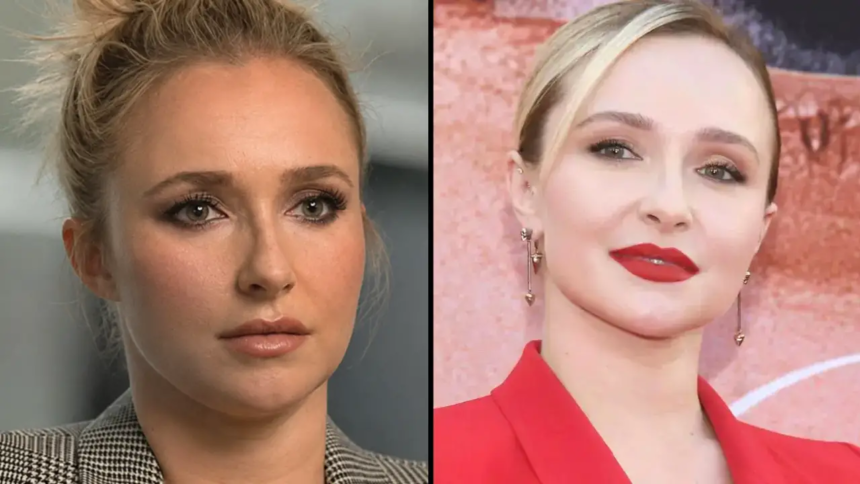

Hayden Panettiere has explained why she gave up custody of her 2-year-old daughter.
For years, Panettiere has faced painful public scrutiny over one of the most personal decisions of her life: giving up custody of her daughter, Kaya.
The actress, best known for her roles in Heroes, Nashville, and the Scream franchise, has often been the target of harsh criticism and online speculation surrounding her relationship with her child.
Now, Panettiere is finally opening up in heartbreaking detail about what really happened during that difficult chapter of her life.
During a deeply emotional appearance on Jay Shetty’s On Purpose podcast, the 36-year-old actress addressed long-standing claims that she ‘abandoned’ her daughter. Fighting back tears, Panettiere explained that the narrative surrounding her custody decision could not be further from the truth.
“The idea that anybody would think that I would just give away my child and be OK with it is heartbreaking,” she said. “It couldn’t be further from the truth.”
Panettiere shares 11-year-old daughter Kaya Evdokia Klitschko with former fiancé Wladimir Klitschko, the retired Ukrainian heavyweight boxing champion.
While Kaya now lives primarily in Europe with her father, Panettiere insists their bond remains incredibly strong, even across continents.
But before reaching that place of peace and understanding, the actress endured years of emotional turmoil, addiction struggles, postpartum depression, and intense public judgment.
Hayden Panettiere’s private battle behind the scenes
At the height of her career, Panettiere appeared to have everything together publicly.
She was starring as country singer Juliette Barnes on the hit drama Nashville, raising a young daughter, and maintaining a high-profile relationship with Klitschko. Behind closed doors, however, she says she was unraveling.
After giving birth to Kaya in December 2014, Panettiere began struggling with severe postpartum depression, a condition she says many people around her failed to understand at the time.
The actress revealed that she felt isolated and ‘unfixable’ as she battled overwhelming depression, anxiety, alcoholism, and substance abuse, per USA Today.
Although she sought treatment multiple times, she explained that many rehabilitation programs focused primarily on addiction without properly addressing the postpartum depression fueling much of her pain.
“I desperately needed help,” Panettiere recalled on the podcast. “I know this is going to look terrible, but I cannot live like this anymore.”
She also pushed back against rumors suggesting she had been forced into rehab, clarifying that she voluntarily checked herself into treatment because she knew she was spiraling.
At the time, Panettiere’s life began eerily mirroring her Nashville character, Juliette Barnes, who also struggled with postpartum depression on the show.
While audiences watched the fictional storyline unfold onscreen, the actress was quietly experiencing many of the same emotions in real life.
She later admitted she often felt like she was simply ‘acting’ her way through everyday life while privately losing herself.
The custody decision that changed everything
By 2018, Panettiere says her mental health struggles had become impossible to ignore. During that period, Klitschko made the decision that their daughter Kaya should live with him in Ukraine full-time.
The actress previously revealed during an appearance on Red Table Talk that signing over custody ‘wasn’t really a discussion.’ At the time, she believed the arrangement would be temporary while she focused on getting healthy.
“I was gonna work on myself and get better,” she explained in an earlier interview. “And when I got better, things could change and she could come to me. But that didn’t happen.”
On Jay Shetty’s podcast, Panettiere admitted her initial reaction was fierce and emotional.
“I went like mother lion,” she said, per AOL. “I would have burnt the world down for my child.”
Still, as painful as the decision was, she slowly came to recognize that Kaya was thriving in her new environment. Surrounded by stability, friends, activities, and family support, her daughter began building a happy life overseas.
Panettiere says accepting that reality became one of the hardest emotional hurdles she has ever faced.
“By the time I finally got healthy, I felt like it would have been unfair of me and selfish of me to try to pull her out,” she admitted.
Even now, the actress describes relinquishing custody as ‘the most heartbreaking thing’ she has ever done.

Kaya’s life today
Despite years of speculation about their relationship, Panettiere says she remains deeply connected to her daughter.
Kaya, now 11 years old, reportedly speaks five languages — English, Russian, Ukrainian, German, and French — and enjoys horseback riding, skiing, swimming, and spending time outdoors, People reports.
Panettiere often beams with pride when talking about her daughter’s accomplishments and personality.
“She’s an incredible little girl,” the actress said. “So happy and speaks five languages and rides her horses.”
Though distance separates them physically, Panettiere says they spend significant time talking on FaceTime and sharing meaningful conversations.
“We talk about really deep things,” she explained. “We have a really intense, incredible bond.”
The actress also firmly rejected the idea that Kaya feels abandoned by her mother.
“She knows that she’s got two parents that love her,” Panettiere said. “I know in my heart that she feels supported.”
Panettiere travels to see Kaya whenever possible and has worked hard to ensure her daughter feels emotionally secure despite the unconventional living arrangement.
Her openness about motherhood, addiction, and mental health has resonated with many women who have experienced postpartum depression firsthand. Over the years, the actress has become increasingly vocal about the stigma surrounding maternal mental health struggles and how dangerous silence can be.
“I wish somebody had told me what postpartum depression felt like,” she previously shared in another interview. “I thought something was seriously wrong with me.”
A childhood marked by pressure and pain
Panettiere’s recent interviews have also shed light on the complicated family dynamics that shaped much of her life long before motherhood entered the picture.
The actress revealed that she started working in Hollywood as an infant and grew up under enormous pressure as the primary financial provider for her family.
Her mother, Lesley Vogel, also managed her acting career, creating what Panettiere described as a blurred and emotionally exhausting relationship.
“Everything was business,” she recalled. “I became everything but her child.”
During the podcast, Panettiere shared a painful memory from when she was 19 years old and attempted to separate her professional relationship from her mother while filming Heroes.
“I said, ‘I don’t want us to work together anymore. I just want you to be my mom,’” Panettiere remembered.
According to the actress, her mother responded with three devastating words: “You owe me.”
The moment left a lasting emotional scar and contributed to years of guilt, confusion, and emotional instability that would later intensify during adulthood.
Panettiere has also spoken candidly about the devastating 2023 death of her younger brother, actor Jansen Panettiere, describing it as another life-altering trauma she continues to process.
Why Hayden Panettiere ultimately let Kaya go
Only after years of public speculation did Panettiere finally explain the real reason she gave up custody of her daughter: she believed it was the most selfless decision she could make while battling severe postpartum depression, addiction, and emotional collapse, TMZ reports.
At the time, she says she knew she could not fully care for Kaya in the healthy, stable way her daughter deserved.
Rather than allowing her struggles to negatively affect Kaya’s upbringing, Panettiere made the painful choice to step back and focus on surviving, healing, and rebuilding herself.
“It was the hardest thing I could do,” she once said. “But the best thing for my daughter was to make sure she was okay, take care of myself, and make sure I could be a good mom to her. And sometimes that means letting go.”
“It was the hardest thing I could do,” she once said. “But the best thing for my daughter was to make sure she was okay, take care of myself, and make sure I could be a good mom to her. And sometimes that means letting go.”