
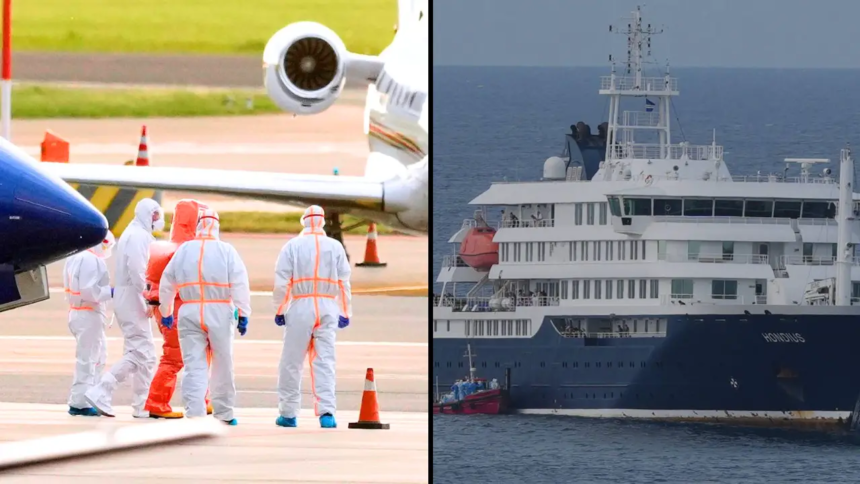

Officials believe they have uncovered the origin of the deadly hantavirus outbreak, which has killed three cruise ship passengers on board the MV Hondius.
Several passengers fell ill during the ship’s journey from Argentina to South Africa, with three people tragically losing their life as a result of the illness.
Hantavirus actually refers to a group of viruses, which are typically spread among rodents, but that can cause serious illness and death in humans.
The main two illnesses caused by hantavirus are Hantavirus Pulmonary Syndrome (HPS), which affects the lungs and can be life-threatening and Hemorrhagic Fever with Renal Syndrome (HFRS) which affects the kidneys.
A rare strain of the virus known as the ‘Andes’ variant has been identified among patients who contracted the illness during the current epidemic.
What are the symptoms of hantavirus?
While the exact symptoms are likely to vary depending on the variant, the early signs often resemble that of the flu, making it difficult to identify unless you have knowingly been in contact with the virus.
These symptoms can include a fever and chills, muscle aches and a headache, and in the case of HPS, would likely include shortness of breath, coughing and buildup of fluid in the lungs. Other early symptoms of HPS involve fatigue, dizziness, nausea and vomiting and diarrhoea.
Meanwhile, HFRS is likely to present slightly differently, with symptoms in the first one to two weeks including intense headaches, back pain, abdominal pain, fever and chills, nausea and blurred vision. As the virus progresses, this can lead to low blood pressure, internal bleeding and acute kidney failure.
Who is currently affected by the hantavirus epidemic?
As it stands, there has been eight cases of hantavirus linked to the MV Hondius cruise ship, three of whom have sadly died.
The first fatality was a 70-year-old Dutch man who became sick on April 6 and died on the ship five days later. His wife, 69, also became ill while on board the ship. She flew to South Africa with her husband’s body, however her condition deteriorated and she later died in a Johannesburg hospital on April 25.
A third cruise passenger, who reports are describing as a German woman, developed symptoms and died on the ship on May 2.
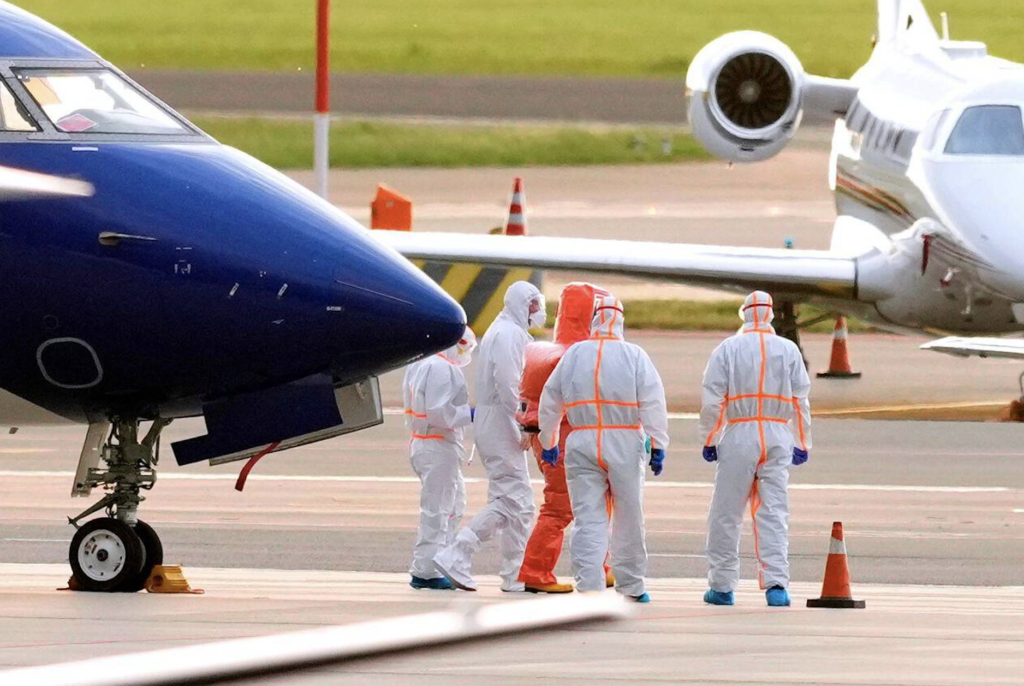
There has been five more suspected cases of hantavirus and three people were medically evacuated from the ship.
The World Health Organization (WHO) has issued a statement after concerns started growing over whether the hantavirus could result in another global pandemic, like Covid-19.
“This is not the next Covid but it is a serious infectious disease. If people get infected, and infections are uncommon, they can die,” WHO epidemiologist Maria Van Kerkhove said in a press conference.
“People on the ship who are hearing this are very scared, rightly so. The general public might be scared as well. Accurate information is critical. Knowing what your actual exposure might be – most people will never be exposed to this.”
Confirming the medical evacuations, Dr Tedros Adhanom Ghebreyesus, director-general of the WHO, wrote on social media: “Three suspected hantavirus case patients have just been evacuated from the ship and are on their way to receive medical care in the Netherlands in co-ordination with WHO, the ship’s operator and national authorities from Cabo Verde, the United Kingdom, Spain and the Netherlands.
“WHO continues to work with the ship’s operators to closely monitor the health of passengers and crew, working with countries to support appropriate medical follow-up and evacuation where needed.
“Monitoring and follow-up for passengers on board and for those who have already disembarked has been initiated in collaboration with the ship’s operators and national health authorities. At this stage, the overall public health risk remains low.”
What caused the current hantavirus outbreak?
Health officials now believe they might have ‘worked out’ the origin of the current outbreak of hantavirus in humans.
The virus is usually spread through contact with rodent urine, droppings or saliva and typically when contaminated particles become airborne and are inhaled.
It is now believed the Dutch couple, who sadly passed away, caught the virus during a bird watching trip in Argentina.
They said the couple are likely to have been exposed to infected rodents during the trip to a landfill site near Ushuaia in mid-March, before boarding the expedition cruise ship on March 20.