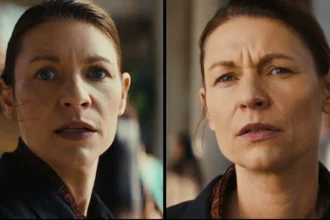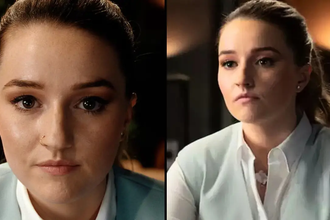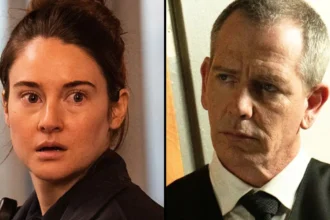

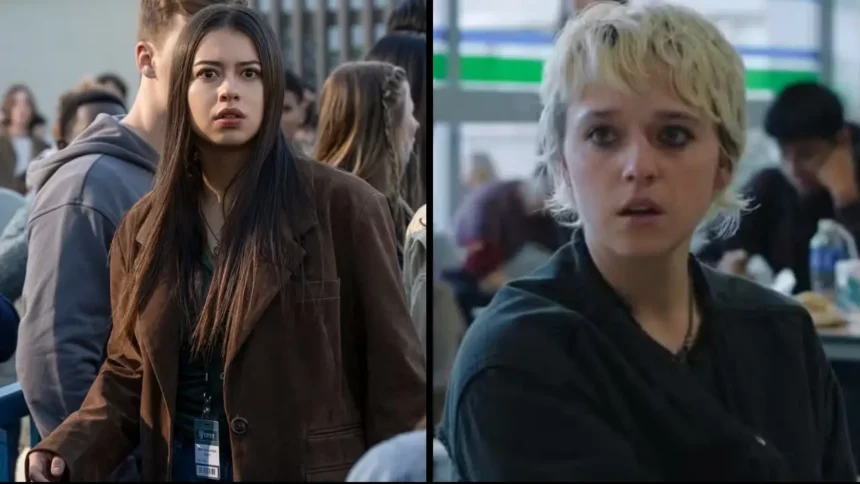

Mike Flanagan’s new TV show adaptation of Stephen King’s Carrie has sparked fierce debate over its major changes to the original story.
Viewers are divided over everything from the casting and prom sequence to the introduction of super-powered characters.
Stephen King fans have been arguing over the latest adaptation of Carrie, with Mike Flanagan’s new Prime Video series receiving both enthusiastic praise and some seriously harsh criticism since all eight episodes landed on the streaming platform.
Based on King’s 1974 debut novel, the 2026 series takes the familiar story of bullied teenager Carrie White and expands it into something much bigger, introducing new characters, a wider supernatural universe and a very different ending.
Flanagan has been open about the changes, explaining that he wanted to explore how the teenage experience has evolved since the original story was written.
He also revealed that King himself was closely involved in the creative decisions, including some of the alterations that have proved most controversial.
However, not everyone has been convinced by the new direction. While some viewers are loving the reimagining, others have criticised the acting, pacing, visual effects and the decision to move away from the bleak isolation at the heart of the original story.
And amid all the debate, one complaint keeps coming up…
Mike Flanagan says Stephen King approved the changes
The debate intensified after DiscussingFilm shared comments from Flanagan about updating the story for modern audiences.
“The high school & teenage experience has changed radically,” the filmmaker explained. “There’s a lot new things to say, a lot of new perspectives on this story that we, Stephen King included, felt deserved to be told.”
But the explanation did little to win over every viewer.
One viewer branded the series ‘one of the worst adaptions ever,’ complaining that it was ‘poorly acted, bad music, so discombobulated.’
He also took aim at the opening episode, describing the introduction of Carrie’s best friend as ‘cringe’ because of what he saw as overacting, while calling the ‘manic mean girl’ character ‘so silly.’
Another viewer was unconvinced by Flanagan’s comments about updating the teenage experience, writing: “Teenage experience has changed radically. Nothing about that in the series btw.”
Others, however, were considerably more positive. One viewer said they were more than halfway through the first episode and were ‘totally digging it so far,’ while another said they and their mother were enjoying the first two episodes.
The series’ changes have also prompted some viewers to defend the decision to rework King’s story. One fan pointed out that the author has never been opposed to updating his work through adaptations, adding that they were enjoying the changes after watching the opening episode.
Another joked about how the famous prom disaster now has a group chat, while a different viewer praised the blood-soaked sequence as being ‘very on brand for Carrie.’
Not every criticism was about the story itself. One viewer questioned the realism of a school apparently simulating gunfire and having a person dressed as a school shooter burst through doors while pupils were still in class, asking what American school district would ever allow such a scenario.
Others have criticised the decision to expand the story into three seasons, with one frustrated viewer insisting: “It’s not you changing the context of the book to update it that we have a problem with, it’s THAT YOU’RE SPLITTING IT INTO 3 SEASON”.
Despite the backlash, Flanagan has continued to discuss his approach to the series, with some fans even expressing surprise that he was giving interviews while people were criticising his work.
Stephen King was involved in the biggest changes
In an interview with Polygon, Flanagan explained that he went directly to King before embarking on the adaptation.
“There’s no world where I’m doing anything like that without talking to Steve about it first,” he said. “He got to see all of that before I agreed to do the show, and was very intimately involved in deciding how we wanted to expand that universe.”
According to Flanagan, some of the most debated additions came directly from King himself.
“Some people seem animated by trying to protect Stephen King in this, and what I want to say to them is, ‘Guys, this is Steve’s idea,’” he explained.
“Steve believed very much that the story had already been told as he had written it. What excited him and animated him about this was the chance to expand that universe and to open it up into a much broader world.”
One of the most significant changes is the revelation that Carrie is not the only woman with psychic abilities. The series introduces other women with similar powers and even refers to their shared abilities as “the Shine”, connecting the story to the wider supernatural universe found throughout King’s writing.
Flanagan said the idea felt like a natural development, given that King has repeatedly linked characters and settings across his books.
“If Steve had written this book just a little later in his career, I think he would’ve been calling it the Shine,” he said.
“Even in the book as it is, he points to the larger universe and says, ‘Carrie’s not alone. She just doesn’t live long enough to realize that.’ It’s one of the things he was the most excited about in this.”
For Flanagan, the new series offered an opportunity to explore an idea that was already present in the original novel, rather than simply repeating the story audiences already knew.
However, for viewers who wanted a more faithful adaptation, the expanded mythology has become another source of frustration.
Why does Carrie survive in the new series?
Perhaps the biggest departure from King’s original story is the fate of Carrie herself.
In the novel, Carrie dies after the devastating events surrounding prom night. In the new series, however, she survives and is taken away by Emaline, a character who does not exist in the book.
Flanagan confirmed that keeping Carrie alive was a deliberate decision made with the possibility of telling a larger story in mind.
“We all, including Steve, agreed that this version of Carrie deserved to survive the story, and we were always servicing that,” he said.
The filmmaker acknowledged that fans who prefer the original ending might struggle with the decision.
“As a King purist, I’m deeply sympathetic to those reactions,” he explained, while adding that he was grateful for the people who had enjoyed the new direction and were interested in seeing where it might lead.
The final moments suggest that Carrie and Emaline could be embarking on an entirely different adventure, with Emaline telling Carrie that she is a god and that the world belongs to her.
The ending has naturally prompted speculation about whether the series is setting up a second season.
Flanagan has also defended the changes by pointing out that audiences who want a more traditional version of the story have other adaptations available.
“If people truly aren’t interested in exploring those directions, they’ve got three other versions that they can fall back on that will give them what they’re comfortable with,” he said.
“But that was just never our goal. Our Carrie was always so different from the one in the book, and that was something Steve was also excited about.”
He also praised Brian De Palma’s celebrated 1976 film adaptation, saying: “Steve loves De Palma’s movie. And I agree. It’s perfect. But his whole excitement here was that this is a great opportunity to expand the world.”
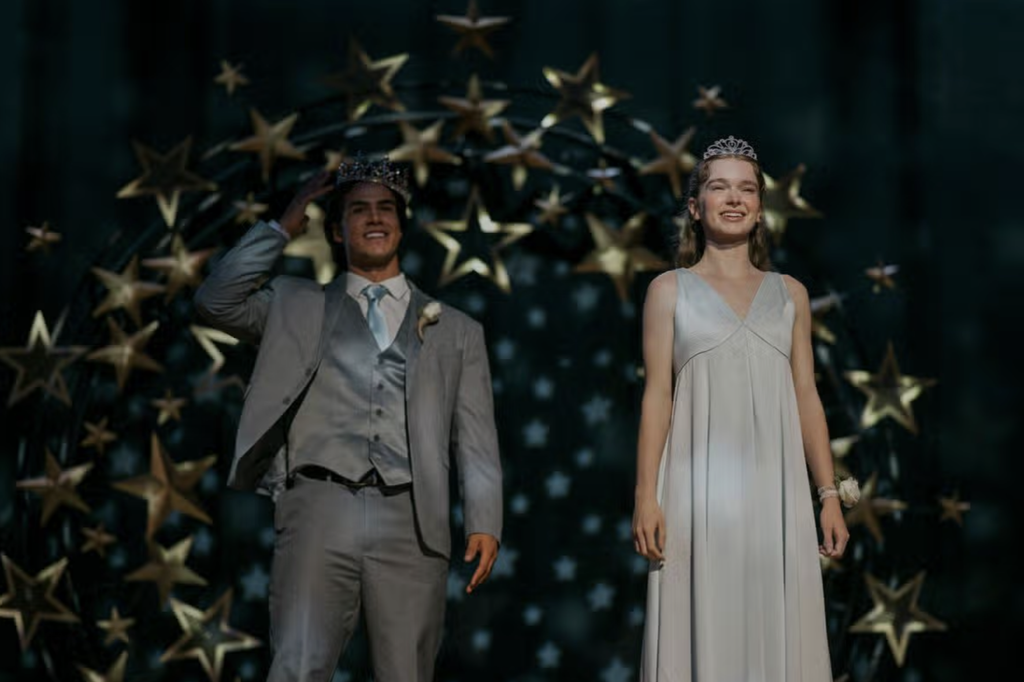
Four major changes that have divided viewers
The series makes several substantial changes beyond Carrie’s survival, with some of the most important differences involving her family, new characters and the consequences of the prom-night massacre, per the Mirror.
1. Margaret White is less fanatical
In King’s novel, Carrie’s mother, Margaret White, is a deeply religious fanatic who condemns her daughter’s supposed sinful thoughts and physically abuses her. She is often presented as cruel and monstrous, making Carrie’s home life another source of terror.
The television version takes a somewhat different approach. Although Margaret remains a woman of strong religious convictions, she is portrayed as less fanatical and more capable of acting to protect her daughter. The series also hints at conspiracy-theory beliefs within Carrie’s family.
The character’s background is altered, too. In the book, Carrie’s father dies in a construction accident before she is born.
The new series therefore changes the dynamic between mother and daughter, with some viewers arguing that Carrie receives more support and protection than she did in the original story.
2. Mr Peist and the dangers of online rumours
The character of Mr Peist, played by Rahul Kohli, is an entirely new addition to the adaptation. Mr Morton also has a slightly different role, working as a school counsellor rather than a vice-principal.
Mr Peist’s storyline helps the series explore online bullying, social media and the speed at which rumours can spread through a community.
After his secrets are accidentally exposed to the wider public, he becomes one of the victims of the same online behaviour affecting the students. His fate is intended to demonstrate how devastating the consequences of rumours can be.
The focus on digital life is one of the ways the series attempts to bring King’s story into the present day, where humiliation and harassment can continue long after the school day has ended.
Yet the effort to modernise the story has not convinced everyone who feels the adaptation’s broader changes weaken the original’s more disturbing atmosphere.
3. Emaline and the other girls with powers
Emaline, played by Thalia Dudek, is one of the most significant additions to the series. She initially appears to be a lonely student who befriends Carrie and encourages her to explore her abilities.
The story later suggests that Emaline may not be real, before revealing that she does exist and has been guiding Carrie from a distance using what appears to be astral projection.She ultimately appears in person in the finale and takes Carrie away.
Emaline is not the only new character with supernatural abilities. The series introduces a group of apparently super-powered women who seem to be tracking Carrie throughout the story.
In another major departure from the book, Emaline effectively takes over from Carrie before carrying out her revenge, shifting the balance of power away from the central character.
Flanagan told Polygon that King had a particularly strong interest in Emaline.
“I see so much discourse about Emaline, which was the character King had the most input into and the one he was the most excited to shape,” he said.
“So it’s very interesting to me to watch people defend Steve from Steve. But these were the things we always knew were going to be the controversial elements.”
The introduction of this wider group of characters is also what makes the series feel so different from the original novel, where Carrie is very much alone as her powers spiral out of control.
4. A very different ending
The changes become particularly pronounced in the finale, which alters the fates of several characters and the aftermath of prom night.
In the original story, around 440 people die during the catastrophe, including many of Carrie’s classmates. The destruction has far-reaching consequences for the town, which is forced to shut down as survivors leave and a government inquiry investigates what happened.
The novel also sees the principal and gym teacher resign from their careers, blaming themselves for failing to help Carrie more effectively. They do not die at prom.
The television series takes a different approach to the fallout and does not explore the town’s destruction and its aftermath in the same way.
Margaret’s fate is also changed. In the series, she somehow survives after the house collapses on top of her, only to be killed by an unknown person posing as a documentary filmmaker, who appears able to stop her heart at will.
In the novel, Carrie herself stops her mother’s heart using her powers. The confrontation between mother and daughter is similar in broad terms, but Carrie ultimately dies from the stab wound inflicted by Margaret.
Before dying in the book, Carrie establishes a telepathic connection with Sue Snell. She discovers that Sue was not involved in the prom prank and did not intend to hurt her. Through their psychic link, Sue experiences Carrie’s final moments.
King tells parts of this story through excerpts from Sue’s memoir and police interviews.
The new series instead leaves Carrie alive, with Emaline driving her to safety and apparently opening the door to a much larger supernatural story.
The novel’s own closing pages offer a possible point of connection with the new mythology. They feature a letter from a woman to her sister, describing her infant daughter and predicting that the child may possess powerful abilities inherited from previous generations.
It is possible to see how that idea could have inspired the series’ wider group of women with supernatural powers, although the television adaptation takes the concept much further.
Fans are also comparing the new Carrie with earlier adaptations
The changes have inevitably led to comparisons with previous versions of the story, particularly De Palma’s 1976 film starring Sissy Spacek and the 2013 remake featuring Chloë Grace Moretz.
One viewer, Soullanet Pluto, argued that the 2013 film was superior in terms of ‘acting, pacing and vfx,’ describing the 2026 prom sequence as ‘cheap, tacky and poorly edited.’
They also argued that Carrie should feel intimidating and frightening in the scene, claiming the new portrayal lacked the unsettling presence they expected from the character.
The same viewer later clarified that their criticism was directed at the prom sequence rather than the entire series, acknowledging that different people would prefer different adaptations.
They also praised the new actress for the way Carrie fights back and for the rage she brings to the character throughout the show, even while arguing that the blood-soaked prom scene did not fully work for them.
Another viewer, Miri, took issue with the idea that Carrie needed to be physically unattractive to be frightening. They said they had always felt Spacek was too pretty for the role, and disagreed with the way the original film handled Margaret’s death, but maintained that Spacek was still genuinely scary.
“The prom is scary and disturbing!!” they wrote when discussing the earlier film.
Miri also argued that the new adaptation gives Carrie too much support from the people around her, pointing to her neighbour, a new character they compared to an X-Men-style superhero, a less unhinged mother and kinder teachers.
In their view, this undermines the isolation that makes the original story so effective. In the book and De Palma’s film, Carrie feels almost completely alone, even when Sue Snell and teacher Miss Desjardin attempt to help her.
Other fans have been enthusiastic about the new prom sequence, with one viewer describing the moment Carrie flies from the stage and telekinetically clears a path through the crowd as ‘crazyyy,’ adding: “Oh Mike Flanagan this is why I never doubted you”.
The contrast between these reactions illustrates how differently audiences approach the same scene. For some, the new sequence is a spectacular reinvention of a familiar moment. For others, the spectacle comes at the expense of the horror.
There has even been confusion online over a rumour that the episodes display a ‘presented by chatgpt’ message, with one viewer asking whether the claim was true. The posts provided do not establish that this actually appears in the series.
Meanwhile, original Carrie star Sissy Spacek has reportedly expressed affection for the new adaptation, with Entertainment Tonight sharing that she called the 2026 series a ‘beautiful homage.’
Her positive reaction offers a different perspective from the harsher online criticism, suggesting that not everyone connected with the earlier versions sees the new series as a betrayal of the original.
Is the new Carrie too different from the original?
Ultimately, the debate surrounding Flanagan’s Carrie is not simply about whether the series has made changes to Stephen King’s novel. The filmmaker has been clear that reinvention was the intention, and King himself was involved in shaping the new direction.
The question is whether those changes preserve what made the original story so powerful.
The new series updates the setting, explores online bullying, expands King’s supernatural mythology and gives Carrie a future beyond the tragedy of prom night. For viewers who welcome a fresh interpretation, those decisions offer plenty of new material to explore.
For others, however, the additional characters, supernatural connections, and more supportive world around Carrie make the story feel less claustrophobic and less disturbing than it should.
That criticism also explains why the comparisons with Spacek and Moretz keep resurfacing. Fans are not necessarily demanding that every adaptation repeat the same scenes, but many want Carrie to feel frightening, isolated, and tragic rather than simply powerful or spectacular.
And that is the complaint at the heart of the backlash: for all its ambition, new mythology and dramatic changes, some viewers feel the 2026 series has lost the very thing that made Carrie terrifying in the first place.