

Netflix’s new Lizzie Borden series has been slammed by fans and critics, with viewers repeatedly raising the same complaint about its treatment of the infamous true story.
Monster: The Lizzie Borden Story arrived on Netflix on September 17 as the fourth installment of Ryan Murphy and Ian Brennan’s hugely successful Monster anthology TV series.
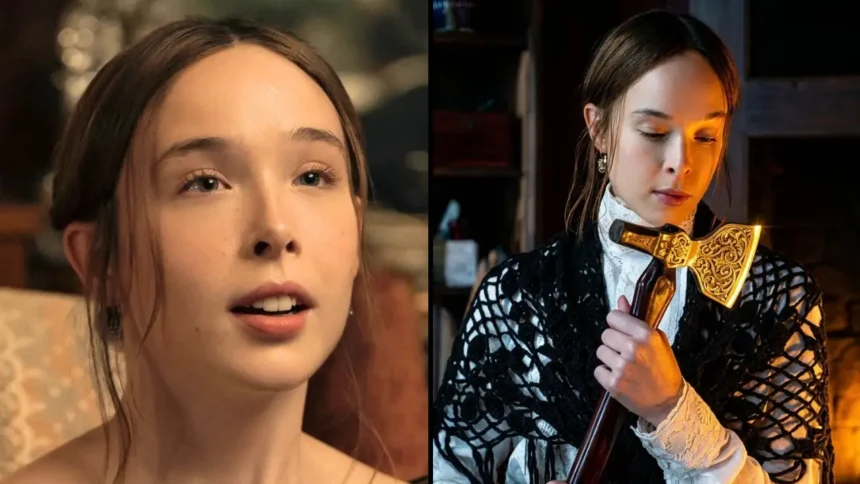
The eight-episode series stars Ella Beatty as Lizzie Borden, the Massachusetts woman who was accused of killing her father and stepmother in 1892 before being acquitted in one of America’s most famous criminal trials.
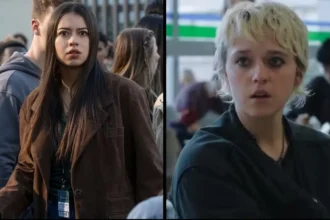
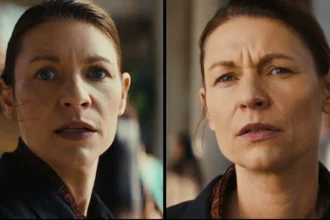
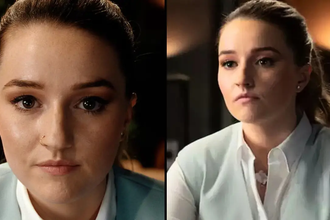
Charlie Hunnam plays Lizzie’s father Andrew Borden, Rebecca Hall portrays her stepmother Abby, Billie Lourd plays older sister Emma and Vicky Krieps appears as the family’s Irish maid Bridget ‘Maggie’ Sullivan.
Sarah Paulson also takes on an unexpected role as Aileen Wuornos.
Netflix describes Beatty’s character as a young woman confined by Victorian society and an unhappy household, while the wider season explores themes surrounding women, anger and violence across different periods of history.
But the series has proved immediately divisive.
Who was Lizzie Borden and what is the true story?
Lizzie Andrew Borden was born in Fall River, Massachusetts, in 1860.
She grew up with her older sister Emma and father Andrew, a wealthy businessman known for his frugal lifestyle.
Lizzie’s biological mother died when she was a child, and Andrew later married Abby Gray, who became Lizzie and Emma’s stepmother.
The family lived together at their home on Second Street in Fall River.
Then, on August 4, 1892, Abby was found dead inside an upstairs room of the house.
Andrew was later discovered downstairs. Both had suffered numerous injuries caused by a sharp-edged weapon.
The case quickly became a national sensation.
Suspicion eventually centered on Lizzie, who was 32 at the time and had been at the property that morning.
Prosecutors highlighted various pieces of circumstantial evidence during the investigation, including inconsistencies surrounding Lizzie’s movements and the fact she burned a dress several days after the deaths.
There were also reports that she had attempted to purchase prussic acid before the incident.
However, significant pieces of evidence were either disputed or excluded from her trial, while investigators had no direct physical evidence conclusively tying her to the deaths.
Lizzie went on trial in 1893.
After little more than an hour of deliberation, the jury found her not guilty.
Nobody else was subsequently convicted of killing Andrew and Abby.
That means more than 130 years later, there is still no definitive answer to one of the most famous questions in American true crime:
Did Lizzie Borden actually do it?
Even Netflix’s own explainer acknowledges that nobody knows for certain what happened.
The famous Lizzie Borden rhyme isn’t completely true either
Lizzie’s name was immortalized in the famous rhyme beginning: “Lizzie Borden took an axe…”
But even the version many people grew up hearing is far removed from the historical record.
Abby was Lizzie’s stepmother rather than her biological mother, while the rhyme dramatically exaggerates the number of blows suffered by both victims.
It also helped turn Lizzie into something approaching a fictional horror character despite the fact a jury acquitted her.
That mixture of history, rumor and pop culture has followed the Borden case ever since.
And it has provided filmmakers and authors with plenty of room to come up with their own explanations.
What is Netflix’s Monster: The Lizzie Borden Story about?
Netflix’s version makes some much firmer choices.
The official Rotten Tomatoes description doesn’t merely describe Lizzie as a suspect.
It states that the show’s version of Lizzie kills her parents, immediately establishing the interpretation the drama intends to follow.
Over eight episodes, viewers see a fictionalized account of Lizzie’s life inside the Borden household, the events preceding Andrew and Abby’s deaths, the investigation and her eventual trial.
The series also travels far beyond 1892.
Krieps doubles as Elizabeth Báthory, the Hungarian noblewoman around whom numerous dark legends developed, while Paulson portrays Aileen Wuornos in scenes taking place decades after Lizzie’s death.
There is no evidence Wuornos had the fascination with Borden depicted by Monster, while the women could obviously never have met.
Lizzie died in 1927. Wuornos was born in 1956.
Instead, their inclusion allows the creators to connect different stories through the season’s broader exploration of what Beatty described to Tudum as a legacy of ‘female rage.’
Netflix has also been unusually open about the degree of dramatization involved.
Beatty told Tudum she used genuine material about Borden’s life to inform what she called the ‘very fictionalized version’ created for the show.
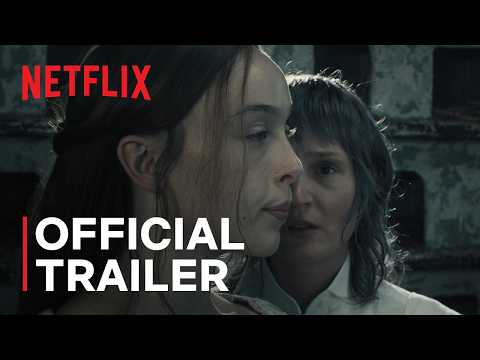
Watch the trailer for Netflix’s Monster: The Lizzie Borden Story below…
Lizzie Borden’s story has been adapted for TV and film before
Netflix is far from the first production to offer its own answer to the mystery.
Elizabeth Montgomery starred as Lizzie in the 1975 TV movie The Legend of Lizzie Borden, which incorporated material from the real trial while ultimately presenting one possible interpretation of what happened.
Fionnula Flanagan played Bridget Sullivan.
That production followed the deaths, investigation and highly publicized court case, with Clea DuVall playing Emma Borden and Billy Campbell appearing as Lizzie’s attorney Andrew Jennings.
Christina Ricci then took on the role for Lifetime’s 2014 movie Lizzie Borden Took an Ax.
That production followed the deaths, investigation and highly publicized court case, with Clea DuVall playing Emma Borden and Billy Campbell appearing as Lizzie’s attorney Andrew Jennings.
Ricci returned the following year for The Lizzie Borden Chronicles, which imagined what might have happened after Lizzie’s acquittal and made no secret of substantially fictionalizing her later life.
Then came the 2018 movie Lizzie, starring Chloë Sevigny as Borden and Kristen Stewart as Bridget Sullivan.
In other words, speculation and creative liberties are nothing new to Lizzie Borden adaptations.
But Netflix viewers say the newest version goes considerably further.
Netflix viewers criticize changes to the Lizzie Borden true story
Reactions began appearing almost immediately after the season dropped.
One viewer who finished all eight episodes described the show on X as ‘a glorified fanfiction’ and complained that it dragged.
However, the same post offered enormous praise for Sarah Paulson, saying the actor was ‘in a league of her own.’
The post attracted thousands of likes and hundreds of reposts.
The viewer also joked that the season appeared to have been constructed largely to create the sequence involving Lizzie Borden and Paulson’s Aileen Wuornos.
That criticism is particularly useful because it goes beyond one individual storyline.
For some audiences, the broader problem is the sheer amount of invented material incorporated into a story based on real people.
Another viewer argued that the first three seasons of Monster had felt more grounded in the documented lives and circumstances surrounding their subjects.
They felt the Borden season instead created a heavily fictionalized narrative and then fitted Lizzie into it, rather than allowing the surviving historical evidence to shape the story.
That post had received more than 600 likes and tens of thousands of views when captured.
Others voiced similar frustrations.
One viewer claimed changing the history so significantly had made the series ‘almost unwatchable.’
Another simply wrote: “Just make something factual next time.”
One described the season as ‘horrible and pure fiction.’
However, reaction has not been entirely negative.
Some Netflix viewers love the new Lizzie Borden series
One viewer described Monster: The Lizzie Borden Story as one of the best true-crime recreations they had seen and praised Sarah Paulson’s performance.
Responses underneath highlighted exactly how divided audiences are.
One person replied that the series was entertaining but ‘wildly inaccurate.’
The original poster later acknowledged that there were historical inaccuracies and described the series as heavily dramatized.
That distinction is worth making.
There are viewers enjoying the season as an intentionally heightened television drama, while others are uncomfortable with the amount of fiction being added to the stories of real people.
Professional reviewers have been similarly divided.
What are critics saying about Monster: The Lizzie Borden Story?
At the time of writing, Monster: The Lizzie Borden Story has a 47% Tomatometer score from 14 reviews on Rotten Tomatoes.
Its audience Popcornmeter score stands at 35% from more than 100 ratings.
Those figures could change as additional reviews and ratings are added.
Historical accuracy has featured prominently in the criticism.
RogerEbert.com critic Kaiya Shunyata argued that the season contains interesting ideas but that they are undermined by history being rewritten unnecessarily.
The Guardian praised elements including the performances and energy of the production, but was much less impressed by the way the historical material was handled.
Its review argued that the exaggerated approach left the drama with comparatively little meaningful to say about the real Lizzie Borden.
Other reviewers have been considerably more receptive, particularly to the performances and the series’ willingness to embrace stylized drama rather than presenting itself as a traditional historical recreation.
Who is Ryan Murphy and why has Monster faced criticism before?
Ryan Murphy is one of the most prolific creators in modern American television.
His previous credits include Glee, American Horror Story, Pose and Feud, while he co-created Monster with Ian Brennan.
The anthology began with Dahmer – Monster: The Jeffrey Dahmer Story before moving to Monsters: The Lyle and Erik Menendez Story, Monster: The Ed Gein Story and now Lizzie Borden.
This is also the franchise’s first female-led installment.
Brennan told People that the team felt they had ‘over-indexed on men’ in previous seasons and wanted to explore a woman’s story and wider themes surrounding female anger.
But controversy over dramatization isn’t new to the franchise.
The Lyle and Erik Menendez Story sparked considerable debate in 2024 over some of the choices made when adapting the brothers’ story.
Among the most controversial were scenes which gave their relationship a s**ualized or incestuous implication.
That was not something the series established as fact, and Murphy later explicitly addressed the criticism.
He said the element represented a theory presented from journalist Dominick Dunne’s perspective rather than a conclusion being endorsed by the creators.
Murphy estimated it made up less than one percent of the show and told Netflix’s Tudum: “We’re not presenting it as fact.”
The Menendez family also objected to aspects of the series more broadly, while Murphy defended Monster’s approach of dramatizing competing viewpoints.
That background is particularly relevant now.
Because the Lizzie Borden season once again takes a theory that cannot be proven and turns it into a substantial part of its story.
What did Netflix change about the Lizzie Borden true story?
The show makes numerous departures from the surviving record.
A People fact check identified fictionalized elements involving Andrew Borden’s work, Lizzie’s health, another death incorporated into the narrative and the role played by Bridget Sullivan.
Entertainment Weekly similarly identified multiple historical changes, including events involving Lizzie’s uncle and alterations to the chronology surrounding actress Nance O’Neil.
Nance really did become close to Lizzie later in her life.
But their friendship developed after the Borden trial.
Monster shifts that chronology significantly.
Then there are the sequences involving Wuornos and Báthory, which serve a thematic purpose rather than representing an actual historical connection.
Yet one particular change has generated substantially more conversation online than the rest.
And it is the issue behind one of the biggest questions viewers have been asking since the series arrived.
The major Lizzie Borden storyline viewers are questioning
The Netflix series portrays Lizzie Borden and family maid Bridget Sullivan as romantically involved.
Their relationship isn’t merely included as a smaller piece of the drama.
It becomes central to Monster’s interpretation of Lizzie, her motivations and what ultimately happened inside the Borden household.
That led one X user to ask: “Can somebody explain to me why they made Lizzie Borden a lesbian in the Netflix show?”
The post had attracted more than 400 likes and tens of thousands of views when captured.
Replies were quick to point out that Netflix did not completely invent the idea.
One user explained that speculation about Lizzie’s s**uality has existed for decades but added that there is no conclusive evidence establishing the relationship shown in Monster.
Another commenter similarly noted that previous pieces of media had portrayed Lizzie as being attracted to women.
Others questioned why a disputed theory had been turned into such an important part of the show’s explanation for the case.
The distinction is important. There has been longstanding speculation about Lizzie’s s**uality.
What historians cannot establish as fact is that Lizzie and Bridget were romantically involved.
Was Lizzie Borden really in a relationship with Bridget Sullivan?
There is no documented evidence proving it.
Historian Cara Robertson, author of The Trial of Lizzie Borden, told Business Insider there is no historical record establishing a romantic relationship between the women.
Entertainment Weekly reached the same conclusion when examining the real Bridget Sullivan.
Bridget was a genuine member of the Borden household and was present at the property on the morning Andrew and Abby died.
But surviving records do not demonstrate that she and Lizzie were romantically involved or that Bridget helped carry out the deaths.
So why has the same idea appeared in several different Lizzie Borden adaptations?
The answer goes back more than four decades.
Where did the Lizzie Borden and Bridget Sullivan theory come from?
A major source is Evan Hunter’s 1984 novel Lizzie.
Hunter – who also became famous for writing under the name Ed McBain – combined genuine details from the case with his own fictional solution to the mystery.
In the novel, he imagined a romantic relationship between Lizzie and Bridget and incorporated it into his explanation for the Borden deaths.
Crucially, Lizzie was a novel, not a nonfiction account claiming to have proved the theory.
A contemporary Washington Post review made that distinction clear, describing Hunter’s book as fiction that incorporated substantial material from real inquest and trial transcripts.
The reviewer summarized Hunter’s proposed solution as involving collusion between Lizzie and Bridget, while also questioning whether the theory fitted the historical evidence.
The storyline subsequently became part of Borden pop culture.
The 2018 movie Lizzie again portrayed Lizzie and Bridget as having an intimate relationship.
And now Monster has built extensively on the same idea.
So the theory wasn’t invented by Netflix in 2026.
But it wasn’t established by historians either.
Why did Netflix make Lizzie Borden and Bridget a couple?
The creators have actually explained exactly why they chose this version.
Speaking to Vanity Fair ahead of the series’ release, Brennan discussed the theory originating in Hunter’s 1984 novel.
He acknowledged the lack of proof but invoked the principle that an absence of evidence is not necessarily evidence that something did not occur.
Brennan said the relationship ‘just screams Boston marriage to me’ and described the possibility as ‘too rich to ignore.’
He considered portraying the relationship as one of the smaller speculative leaps made by the series.
That tells viewers quite a lot about the philosophy behind Monster.
The series has not uncovered previously unknown evidence showing Lizzie and Bridget were romantically involved.
Instead, Brennan and Murphy have taken an existing theory from fiction, decided it was plausible and dramatically interesting, and incorporated it into their own version of an unresolved historical story.
There is another layer to the discussion.
Lizzie’s later friendship with actress Nance O’Neil has itself generated speculation about her s**uality over the years.
But that does not allow historians to retrospectively identify Lizzie’s s**uality with certainty.
The same applies in reverse.
There is no basis to state definitively that Lizzie was heteros**ual either.
The historically supportable conclusion is much narrower: We simply don’t know.
The real Lizzie Borden mystery still hasn’t been solved
That uncertainty ultimately sits at the heart of the controversy surrounding Monster: The Lizzie Borden Story.
Brennan and Murphy are creating drama rather than documentary, and both the cast and creators have openly discussed the fictional elements involved.
For some viewers, that freedom makes the series entertaining.
It allows Monster to take an old mystery and create a complete narrative where history offers no definitive answer.
For others, that is exactly the problem. Lizzie was accused. She was tried. She was acquitted.
And nobody has ever conclusively proved who was responsible for Andrew and Abby Borden’s deaths.
Netflix has filled those gaps with its own explanation.
Monster: The Lizzie Borden Story is streaming now on Netflix.